Monday, June 26, 2017

HISTORY OF PAPER

50 B.C.
The Chinese first made paper with short lengths of bamboo and then later added cotton linen rags which were soaked in   water and pounded into swollen pulp. This was then formed into sheets and dried.
2nd Century
   105 A.D: Ts’ai Lun, a Chinese court official, has his name linked to the invention of paper. Most likely, Ts’ai mixed       mulberry bark, hemp, and rags with water, mashed it into pulp, pressed out the liquid, and hung the thin mat to dry in   the sun.
8th Century 
Arabs were known to make writing paper and were the first to use linen in the process.
 Papyrus
12th Century 
Spain, France & Italy had papermaking mills.
13th Century 
Germany had papermaking mills.
14th Century
England recorded locations for papermaking mills. Rags were the principal raw material and they were in short supply, thus limiting growth.
15th Century
   1400-1600In Renaissance Europe, paper was in high demand by the educated and elite society. Paper thus became an essential commodity, but the demand was too great for the supply at the time. Rags were the principal raw material and in short supply.

17th Century
   1648Henry Crane emigrates from England and settles in Dorchester, Massachusetts. His great-grandson, Stephen Crane, is the first in the family to become a papermaker.
   1690: William Rittenhouse and William Bradford of Germantown, PA built the first North American papermaking mill at Wissahickon Creek, near Philadelphia, that used rags as the raw material. Rags were boiled, rinsed, and beaten to a pulp, then pressed to get the water out and dried to become paper. Thanks to a great deal of imagination and hard work, they successfully collected, separated, cleaned, and recycled old cloth rags to make America’s first writing. Among the many picturesque acres of Philadelphia’s Fairmont Park, there is a rare and unique treasure known as Historic Rittenhouse Town. It is the site of America’s first paper mill, established in 1690 by Wilhelm Rittenhausen. Today, 7 buildings remain, dating from the early 18th century until the end of the 19th century, including a barn which houses a papermaking studio, the original Rittenhouse Family Homestead, and the original Rittenhouse Homestead Bakehouse. The site is open to the public and offers many exciting programs that enrich interest and awareness of this important National Historic Landmark and all it has to offer. The paper mill structure unfortunatley no longer exists. The mill building was taken down sometime after Fairmount Park took control of the site in the late nineteenth century. In the mid-1990s, Historic RittenhouseTown Inc. hired archeologists to search for the site of the mill. The base of the second mill has been located and Historic RittenhouseTown Inc. hopes eventually to be able to expose part of the base of the mill and include this in historical interpretation of the site.
18th Century
   1716Hemp was first used in an experiment as a raw material for paper making in Europe.
   1750In Holland the first mechanical rag beater was developed called the Hollander. It was a tube with a revolving roller inside that passed over knives. This cut the rags up for pulping.
   1775The first US paper money – Stephen Crane sells currency-type paper to engraver Paul Revere, who prints the American Colonies’ first paper money. Revere’s transaction is on display in the Crane Museum.
   1791Rags needed in US- The Second Congress of the US passed a resolution calling on the people for rags to keep the infant papermaking industry alive. Rags were deemed in short supply. Alexander Hamilton reported later that year that supply of rags was adequate.
   1798Rolls made instead of sheets- Nicholas-Louis Robert of France invented a machine that produces paper on an endless wire screen. The Frenchman patented the idea of matting the fabric fibers and joining the sheet on a moving wire belt through which excess water could drain away. His machine would make continuous rolls rather tan sheets. It became the Fourdrinier. Fifty years later, papermakers began successfully using wood fiber to make paper, a process that was introduced in the United States in the early 1900s.


19th Century 
   1800Matthias Hoops published a treatise on papermaking written on paper made from straw, leaves, wood and other vegetable products.
Early paper money from British Colonies
   1801Crane is founded by Zenas Crane, Henry Wiswall and John Willard; the original one-vat mill has a daily output of 20 posts (1 post = 125 sheets). Crane runs its first newspaper ad, asking ladies to save their household rags for papermaking.
   1803The Fourdrinier brothers in England improved the Nicholas Louis Robert continuous roll papermaking machine and made the Fourdrinier papermaking machine, which is still the heart of the paper and pulp industry
   1810The US census reported 179 mills in 17 states with an output of 3,000 tons. But the supply of rags was not sufficient to fuel the growth and demand for paper. European imports of rags became very expensive.
   1815European papermakers were flooding the US with exports of paper & rags, making high profits because of the lack of supply of rags in the US. This hurt the US papermaking industry.
   1820The US census reported only 108 mills in operation compared to 179 ten years earlier. The newly invented cylinder-mould machine replaces hand-forming. In Boston, Governor Strong uses Crane paper for executive proclamations and state documents.
   1822A US tariff was implemented to help the papermakers in the US. From here on, the industry grew steadily into its world dominance of today.
   1840Mechanical Process for making wood pulp- The development of the wood grinder for making ground wood now called pulp. This process grinds the wood in revolving grinders. There is little chemical change and the resulting pulp contains practically all the original cellulose constituents of the original wood. This pulp cannot be bleached and is used where color is unimportant, such as newsprint.
   1844Money Paper- Crane patented a method to embed silk threads into banknote paper to foil counterfeiters. The direct descendant of this idea can be seen in the embedded security thread in today’s U.S. currency. It was patented in 1991 by Tim Crane, a member of the sixth generation
   1854Wood pulp first used- Practical results of making paper from wood pulp were first obtained. Mechanical wood pulp or groundwood, as the new pulp was called, was used to supplement the supply of rags, and the mixture of rags and wood pulp produced a paper suitable for the times.
   1856In 1856, the English started to use corrugated paper for sweatband linings in stovepipe hats. Albert L. Jones, a New York City inventor, in 1871 was the first to use corrugated as a packing material for shipping kerosene-lamp chimneys and other glass. Goodbye sawdust and straw – over the next two decades cardboard evolved into today’s familiar sandwich, corrugated stuffing between two layers of linerboard. * see note below
  1866In 1866, an American named Benjamin Tilghman developed the sulfite pulping process. This process used sulphurous acid to dissolve the liqueous constituents of wood, leaving a residual of cellulose fibers. The first mill using this process was built in Sweden in 1874 and this became the dominant pulping process until 1937.
Early British writing paper
   1870There were eight ground-wood mills in the US. Mills were mostly in New England because of large supplies of spruce pulpwood there. In the 1890’s, mills were being erected in the Lake States region because of the supply of spruce and balsam.
   1870Elegant women’s stationery from Europe becomes the rage in America. Zenas Crane Jr. travels to Europe to learn the techniques. Soon, Tiffany, Bailey, Banks & Biddle, Marshall Field’s and Shreve, Crump & Lowe all carry Crane stationary paper.
   1872Charles Benjamin Clark, a 28-year-old Civil War veteran, recruits John A. Kimberly, Havilah Babcock and Frank Shattuck to build a paper mill in Wisconsin. They began producing newsprint from linen and cotton rags on October 22, 1872. Rags were cut up by machines and boiled for 14 hours. Then the rags were steamed, pressure washed, and rinsed for 5 hours. The rags were then bleached, drained and then beaten to make pulp. More bleaching added whiteness.
   1873W. Murray Crane receives a challenge from Winchester Arms Company of New Haven, Connecticut, to develop a strong, thin wrapping for repeater rifle bullets. This lucrative contract carries Crane through the recession of the 1870s. Other innovations around this time include a substitute for parchment, sheepskin for diplomas, and special thin paper for Bibles.
   1874Brothers Thomas Scott, Irvin Scott, Clarence Scott; and their cousins Thomas Seymore and Zerah Hoyt, establish The Scott Paper Company is established in Philadelphia, PA.
   1878API, the American Paper Institute, was first formed as the American Paper Makers Association in 1878. Five years later, it was reorganized and renamed the American Paper Manufacturers Association. A wood pulp division was added in 1887 and in 1897 the organization was again renamed as the American Paper and Pulp Association (APPA). This name lasted for the next 66 years.  Today, the group is part of the American Forest & Paper Association (AF&PA), which was formed in 1993.
   1879W. Murray Crane wins heated competition for U.S. currency paper. He later becomes Governor of Massachusetts and a U.S. Senator.
   1880US – There were now 40 ground-wood mills in America.
   1880: Great Britain- The British Perforated Paper Company produced toilet paper.
   1882: Sweden first used the sulfite pulping process on a commercial basis.
   1883: German inventor Carl Dahl discovered adding sodium sulfate to the caustic soda pulping process produced a very strong pulp. This was called the Kraft process; Kraft means strong in German. During the early 1900’s, the Kraft process became the most important pulping process due to its several distinct advantages. First, the chemicals used to dissolve the lignin were recoverable and tremendous amounts of energy were produced during the recovery process. The process could also pulp pine trees, a predominant forest species in the United States. The Kraft process allowed the United States to become a major producer of paper products; Kraft paper makes paper bags and heavy wrapping.
   1890: The manufacture of sulfite wood pulp was first commercially accepted in the US. This process involved cooking wood chips in an acid, chiefly bisulfite of lime, at high temperature and high pressure. This pulp can be bleached white. Sulfite pulp is very stable and the bleached pulp is good for writing, tissue, book and wrapping papers as well as food containerboard. Unbleached sulfite pulp is used in newsprint.
 

Tuesday, June 20, 2017

HISTORY TIMELINE FOR TOILET PAPER


50 B.C.
The Chinese first made paper with short lengths of bamboo and then later added cotton linen rags which were soaked in water and pounded into swollen pulp. This was then formed into sheets and dried.
14th Century
England recorded locations for papermaking mills. Rags were the principal raw material and they were in short supply, thus limiting growth.
    1391: The first toilet paper reported was used by the Chinese emperor. As a luxury item, only royalty had access to toilet paper. The paper was made in 2 ft x 3-ft sheets. The Bureau of Imperial Supplies began producing 720,000 sheets of toilet tissue per year.
15th Century
   1400-1600In Renaissance Europe, paper was in high demand by the educated and elite society. Paper thus became an essential commodity, but the demand was too great for the supply at the time. Rags were the principal raw material and in short supply.
16th Century
   1596: The Flushing Toilet was invented by Sir John Harrington, who was a British nobleman and godson to Queen Elizabeth I. He invented a valve that when pulled would release the water from the water closet and suggested flushing at least twice a day. Rumor has it that this is where the name the “John” originated.

18th Century
   1700: Initially, colonial Americans used corncobs and leaves to cleanse where toilet tissue is used today. Then, when newspapers became available they were used. Also, the Sears catalog and the Farmers almanac were later used. The Almanac had a hole in it so it could be hung on a nail or string. The French Royalty used lace.
   1798Rolls made instead of sheets- Nicholas-Louis Robert of France invented a machine that produces paper on an endless wire screen. The Frenchman patented the idea of matting the fabric fibers and joining the sheet on a moving wire belt through which excess water could drain away. His machine would make continuous rolls rather tan sheets. It became the Fourdrinier. Fifty years later, papermakers began successfully using wood fiber to make paper, a process that was introduced in the United States in the early 1900s.

19th Century 
   1819The silent valve was patented by Albert Giblin in England. This allowed a toilet to be flushed more efficiently. Albert worked for Thomas Crapper who had a successful plumbing business. It is most likely that Thomas bought the patent from Albert and then marketed the toilet himself from 1861-1904. (Toilet is a French word meaning ‘the act of washing, dressing and preparing oneself’)
   Late 1800’s: The public’s demand for better hygiene coincided with improvements in residential and commercial indoor plumbing.
   1857New Yorker Joseph Gayetty introduced the first packaged Toilet Tissue in the United States. The Gayette Firm, located in New Jersey, produced and sold a package of 500 sheets selling for $0.50 It was named “Therapeutic Paper” and served as a medical paper. It contained an abundance of aloe to help cure sores. Joseph’s name was printed on each sheet!  1890Toilet Paper on a roll was introduced by the Scott Paper Company and quickly becomes the nation’s leading producer of TP. Scott bought large rolls of paper from paper manufacturers and then converted them to become toilet paper on a small roll. The TP was sold through intermediaries, private labelers and drug stores. Scott private labeled the wrappers and cut the paper according to the specification that each reseller wanted. Scott did not want to be associated with this Victorian era “unmentionable” product. The owners did not want their name on the product. The strategy worked and Scott expanded – Scott soon had over 2,000 reselling customers.
   1896Arthur Scott joins Scott and argues that controlling their brand and product specifications is the best strategy rather than selling through resellers.

 20th Century
   1902: The Waldorf brand was a big seller in Philadelphia by a paper jobber, Albert DeCernea. Arthur Scott, the son of Irvin, convinced his father Scott paper should control their own brands and product specifications. Scott therefore bought this private label and this began their first venture into controlling their own brand. By 1921 the Waldorf brand was 64% of Scott’s sales.
   1901Northern Paper Mills from Green Bay Wisconsin is established and introduces Northern Tissue to be used as a sanitary tissue. It is 1,000 sheets of tissue, each 4×10 inches. Each bundle has a wire through it so it can be hung from a nail.
  1907Scott introduces Scott paper towels. The Sani-towels became the first disposable paper towel in America used in Philadelphia schools to help prevent the spread of common colds.
   1910Scott begins to manufacture its own toilet paper. In order to control the standards and quality of the tissue, Scott built its own first manufacturing plant in Chester, PA to make paper. They began making large 72″ parent rolls of tissue and cutting them to smaller rolls. The small rolls were either 650 or 1,000 perforated sheets. The roll of 1,000 sheets sold for $.10 and it was considered a medical item.
   1911Scott eliminates all private-label manufacturing. Scott’s ‘Sno-tissue was renamed ScotTissue. This marked the beginning of the complete concentration on Scott brands and Scott Tissue. They no longer sold through resellers.
   1915Kimberly Clark begins producing absorbent cellulose wadding called Cellucotton. This is to be used as a bandage material in WW1 and army nurses begin adapting this material for menstrual use.
   1918: Kimberly Clark prepares to sell Cellucotton for use in WW I, but the war ends. The project later leads to the development of Kleenex.
   1919Fort Howard Paper Company established in Green Bay Wisconsin.
   1920KC forms the company Cellucotton Products to market Kotex sanitary napkins. The KC Company owners are afraid to associate with this ‘unmentionable’ product. Kotex is first advertised in ‘Ladies home journal’ in 1921 but the ad is restricted in explaining the products use. Also, Northern Mills introduces toilet tissue on a roll and claims to be the largest producer of bath tissue in the world.

Wednesday, June 14, 2017

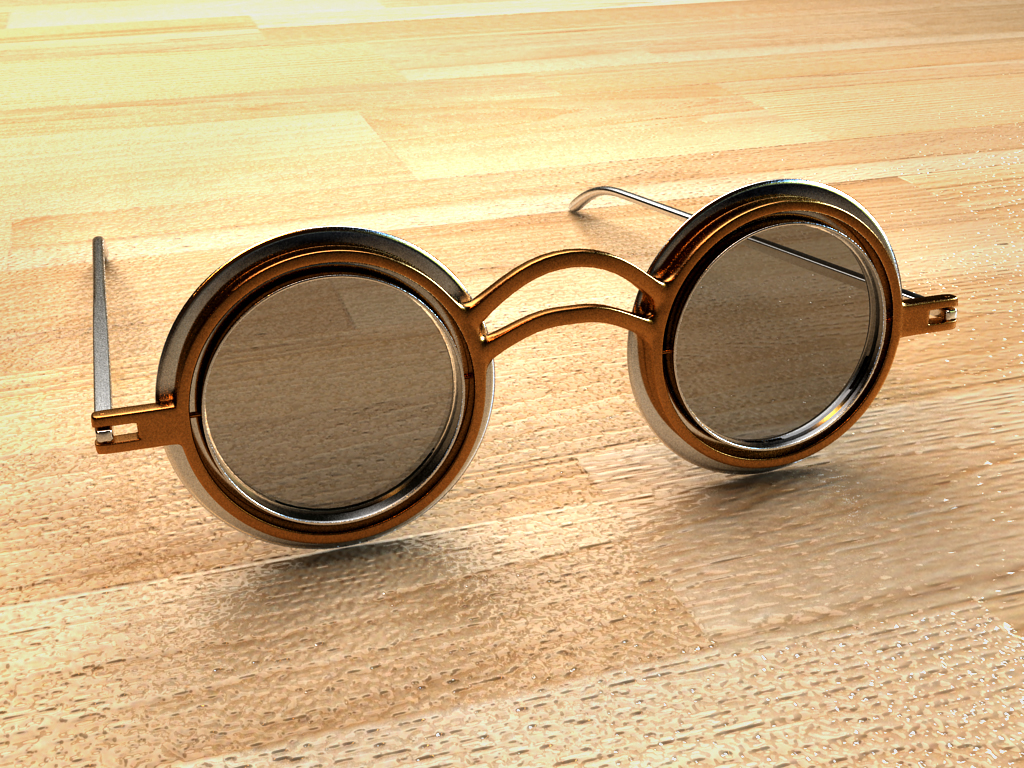
HISTORY OF SUNGLASSES

Would you believe sunglasses existed before 1430? 
    Smoke tinting was the first means of darkening eyeglasses, and the technology was developed in China. The first darkened lenses were not vsion-corrected, nor were they initially intended to reduce solar glare. They served another purpose altogether.
    For centuries, Chinese judges wore smoke-colored quartz lenses to conceal their eye expressions in court. A judge's evaluation of evidence as credible or mendacious was to remain secret until a trial's conclusion. Smoke-tinted lenses came to serve also as sunglasses, but that was never their primary function. And around 1430, when vision-correcting eyeglasses were introduced into China from Italy, they, too, were darkened, though mainly for judicial use.
    The popularity of sunglasses is really a twentieth-century phenomenon. In America, the

military, which played a role in the development of sunscreens, also was at the forefront of sunglass technology.

Thursday, June 8, 2017

HISTORY OF HANDKERCHIEFS

In the 15th Century, French sailors returned from the Orient with large, white linen cloths the Chinese field workers used to protect their heads in the sun. French women adopted the cloths and used them on their heads, calling them couvrechef, meaning "covering for the head." The British then took up the custom and Anglicized the word to "kerchief." Because they were carried in the hand until needed in sunlight, they came to be called hand kerchiefs.

Upper-class European women already had parasols so kerchefs became simply a fashion affectation. This can be seen in numerous illustrations and paintings of the period. Hand kerchefs were elaborately decorated. They were carried, waved and demurely dropped. Some made of silk with silver or gold thread became so costly in the 1500s they were often mentioned in wills as valuables.
Wedding handkerchiefs

Lace handkerchiefs first appeared in England during the reign of Elizabeth I. Eventually they were monogrammed with a loved one's initials or name and measured four inches square, with a tassel dangling from one corner. These were called "true love knots." A gentleman would wear one from his ladylove tucked into his hatband and she would carry his between her breasts.

In the Middle Ages people blew their noses and wiped it on their sleeves.Early etiquette books legitimize the practice. The first admonitions against nose wiping on sleeves appear in 16th century etiquette books in which it was advised to use a hand kerchief instead.

From the nineteenth century clear up until around 1950, a real lady wouldn't be caught dead without a handkerchief. They were often kept tucked up a sleeve until needed. They dangled from purses and, of course, ended up in men's coat pockets.

Next came Kleenex, but that's for another blog.

Monday, May 8, 2017

Review of To Have and To Hold from Books and Benches

A Reader's Opinion: TO HAVE AND TO HOLD by Charlene Raddon

May 8, 2017
A READER'S OPINION

An enjoyable western romance worthy of the genre! TO HAVE AND TO HOLD tells the story of Tempest Whitney, a single mother struggling in debt on the Utah frontier in 1888. She's left with her thieving husband's debts and a ruthless rancher who wants her homestead . . . and Tempest. Enters Buck Maddux, a stranger who was given half of Tempest's ranch and sworn to look after her. Tempest is a strong heroine who desperately wants to be out from under the control of dishonorable men. She's not sure what to make of Buck when he arrives, and it doesn't take either of them too long to figure out that they need each other, even if they'd rather part ways.

TO HAVE AND TO HOLD is wonderfully descriptive with touches of humor and a great romance. Tempest's daughter, Ariel, is a charmer and scene-stealer. This is an entertaining read!
Rating: 4 Stars | Content Rating: 4 Hearts | Reviewed by: Kaylie Morgan

BOOK SYNOPSIS

A widow with two children, Tempest Whitney has had to mortgage everything to repay the money her husband had stolen. But even as she struggles to hold onto her Utah homestead, a scheming rancher buys up her debts, demanding she either get off his land or marry him. Then a dark-haired stranger shows up, claiming to be her dead husband . . .

Buck Maddux spent two years in jail for a crime he didn't commit. Now a deathbed promise has brought him to Tempest's homestead. A man without roots, he doesn't plan to stay—or to feel so fiercely protective of this feisty beauty he saves from a hated marriage of convenience. Suddenly, Buck years for a home, a family, a lasting love. But what can he offer Tempest? The surprising answer lies in the forbidding canyons of an ancient Anasazi tribe, where fortune and danger await—along with a passion more precious than gold….

Monday, April 3, 2017

HISTORY OF TOOTHBRUSHES AND TOOTHPASTE

History of Toothbrushes
Toothbrushing tools date back to 3500-3000 BC when the Babylonians and the Egyptians made a brush by fraying the end of a twig. Tombs of the ancient Egyptians have been found containing toothsticks alongside their owners. Around 1600BC, the Chinese developed "chewing sticks" which were made from aromatic tree twigs to freshen breath.

The Chinese are believed to have invented the first natural bristle toothbrush made from the bristles from pigs' necks in the 15th century, with the bristles attached to a bone or bamboo handle. When it was brought from China to Europe, this design was adapted and often used softer horsehairs which many Europeans preferred. Other designs in Europe used feathers.

The first toothbrush of a more modern design was made by William Addis in England around 1780 – the handle was carved from cattle bone and the brush portion was still made from swine bristles. In 1844, the first 3-row bristle brush was designed.

Natural bristles were the only source of bristles until Du Pont invented nylon. The invention of nylon started the development of the truly modern toothbrush in 1938, and by the 1950s softer nylon bristles were being made, as people preferred these. The first electric toothbrush was made in 1939 and the first electric toothbrush in the US was the Broxodent in 1960.

Today, both manual and electric toothbrushes come in many shapes and sizes and are typically made of plastic molded handles and nylon bristles. The most recent toothbrush models include handles that are straight, angled, curved, and contoured with grips and soft rubber areas to make them easier to hold and use. Toothbrush bristles are usually synthetic and range from very soft to soft in texture, although harder bristle versions are available. Toothbrush heads range from very small for young children to larger sizes for older children and adults and come in a variety of shapes such as rectangular, oblong, oval and almost round.
The basic fundamentals have not changed since the times of the Egyptians and Babylonians – a handle to grip, and a bristle-like feature with which to clean the teeth. Over its long history, the toothbrush has evolved to become a scientifically designed tool using modern ergonomic designs and safe and hygienic materials that benefit us all.

History of Toothpastes
Egyptians are believed to have started using a paste to clean their teeth around 500BC, before toothbrushes were invented. Ancient Greeks and Romans are known to have used toothpastes, and people in China and India first used toothpaste around 500BC.

Ancient toothpastes were used to treat some of the same concerns that we have today – keeping teeth and gums clean, whitening teeth and freshening breath. The ingredients of ancient toothpastes were however very different and varied. Ingredients used included a powder of ox hooves' ashes and burnt eggshells, that was combined with pumice. The Greeks and Romans favored more abrasiveness and their toothpaste ingredients included crushed bones and oyster shells. The Romans added more flavoring to help with bad breath, as well as powdered charcoal and bark. The Chinese used a wide variety of substances in toothpastes over time that have included ginseng, herbal mints and salt.

The development of toothpastes in more modern times started in the 1800s. Early versions contained soap and in the 1850s chalk was included. Betel nut was included in toothpaste in England in the 1800s, and in the 1860s a home encyclopedia described a home-made toothpaste that used ground charcoal.

Prior to the 1850s, 'toothpastes' were usually powders. During the 1850s, a new toothpaste in a jar called a Crème Dentifrice was developed and in 1873 Colgate started the mass production of  toothpaste in jars. Colgate introduced its toothpaste in a tube similar to modern-day toothpaste tubes in the 1890s.

Until after 1945, toothpastes contained soap. After that time, soap was replaced by other ingredients to make the paste into a smooth paste or emulsion - such as sodium lauryl sulphate, a common ingredient in present-day toothpaste.

In the second half of the twentieth century modern toothpastes were developed to help prevent or treat specific diseases and conditions such as tooth sensitivity. Fluoride toothpastes to help prevent decay were introduced in 1914. Toothpastes with very low abrasiveness were also developed and helped prevent the problems caused by overzealous brushing.

The most recent advances in toothpastes have included the development of whitening toothpastes,   and toothpaste containing Triclosan which provides extra protection against caries, gum disease, plaque, calculus and bad breath.

Toothpastes today typically contain fluoride, coloring, flavoring, sweetener, as well as ingredients that make the toothpaste a smooth paste, foam and stay moist. Individual toothpastes also may contain special ingredients, such as triclosan in Colgate Total. Toothpaste in tubes is used throughout the world and has been a very successful invention.

Thursday, March 23, 2017

The History of Ice Cream

The Evolution of Ice Cream

Ice cream's origins are known to reach back as far as the second century B.C., although no specific date of origin nor inventor has been indisputably credited with its discovery. We know that Alexander the Great enjoyed snow and ice flavored with honey and nectar. Biblical references also show that King Solomon was fond of iced drinks during harvesting. During the Roman Empire, Nero Claudius Caesar (A.D. 54-86) frequently sent runners into the mountains for snow, which was then flavored with fruits and juices.

Over a thousand years later, Marco Polo returned to Italy from the Far East with a recipe that closely resembled what is now called sherbet. Historians estimate that this recipe evolved into ice cream sometime in the 16th century. England seems to have discovered ice cream at the same time, or perhaps even earlier than the Italians. "Cream Ice," as it was called, appeared regularly at the table of Charles I during the 17th century. France was introduced to similar frozen desserts in 1553 by the Italian Catherine de Medici when she became the wife of Henry II of France. It wasn't until 1660 that ice cream was made available to the general public. The Sicilian Procopio introduced a recipe blending milk, cream, butter and eggs at Café Procope, the first café in Paris.

Ice Cream for America

The first official account of ice cream in the New World comes from a letter written in 1744 by a guest of Maryland Governor William Bladen. The first advertisement for ice cream in this country appeared in the New York Gazette on May 12, 1777, when confectioner Philip Lenzi announced that ice cream was available "almost every day." Records kept by a Chatham Street, New York, merchant show that President George Washington spent approximately $200 for ice cream during the summer of 1790. Inventory records of Mount Vernon taken after Washington's death revealed "two pewter ice cream pots." President Thomas Jefferson was said to have a favorite 18-step recipe for an ice cream delicacy that resembled a modern-day Baked Alaska. Check out President Jefferson's vanilla ice cream recipe here. In 1813, Dolley Madison served a magnificent strawberry ice cream creation at President Madison's second inaugural banquet at the White House.

Until 1800, ice cream remained a rare and exotic dessert enjoyed mostly by the elite. Around 1800, insulated ice houses were invented. Manufacturing ice cream soon became an industry in America, pioneered in 1851 by a Baltimore milk dealer named Jacob Fussell. Like other American industries, ice cream production increased because of technological innovations, including steam power, mechanical refrigeration, the homogenizer, electric power and motors, packing machines, and new freezing processes and equipment.
 
In addition, motorized delivery vehicles dramatically changed the industry. Due to ongoing technological advances, today's total frozen dairy annual production in the United States is more than 1.6 billion gallons.
Wide availability of ice cream in the late 19th century led to new creations. In 1874, the American soda fountain shop and the profession of the "soda jerk" emerged with the invention of the ice cream soda. In response to religious criticism for eating "sinfully" rich ice cream sodas on Sundays, ice cream merchants left out the carbonated water and invented the ice cream "Sunday" in the late 1890's. The name was eventually changed to "sundae" to remove any connection with the Sabbath.

Ice cream became an edible morale symbol during World War II. Each branch of the military tried to outdo the others in serving ice cream to its troops. In 1945, the first "floating ice cream parlor" was built for sailors in the western Pacific. When the war ended, and dairy product rationing was lifted, America celebrated its victory with ice cream. Americans consumed over 20 quarts of ice cream per person in 1946.

In the 1940s through the ‘70s, ice cream production was relatively constant in the United States. As more prepackaged ice cream was sold through supermarkets, traditional ice cream parlors and soda fountains started to disappear. Now, specialty ice cream stores and unique restaurants that feature ice cream dishes have surged in popularity. These stores and restaurants are popular with those who remember the ice cream shops and soda fountains of days past, as well as with new generations of ice cream fans.

Article thanks to Internations Dairy Foods Association